

Cystoscopy
What does it consist of?
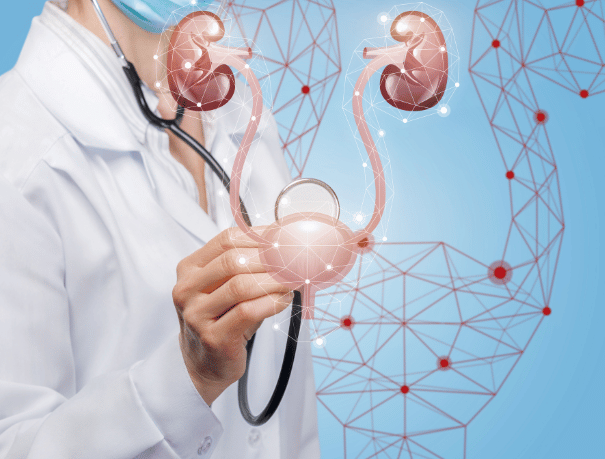
Cystoscopy is a virtually painless diagnostic test performed with a cystoscope. This is a special probe with a small camera on the end (endoscope), which is inserted through the urethra and moves slowly into the bladder showing on a screen the findings of the camera as it passes through the urethra, prostate and bladder.
CASES IN WHICH IT IS RECOMMENDED
Who is it for?
Cystoscopy is used to diagnose, monitor, and treat conditions that affect the bladder and urethra. Your doctor might recommend a cystoscopy to:
- Diagnosis and follow-up of bladder tumors
- Diagnosis of painful bladder, chronic pelvic syndrome, or urethral pain
- Diagnosis of cystopathies (bladder diseases)
- Study of the urethra (such as stricture or obstruction of the urethra)
- Study of prostate adenoma
- Study of repeated urinary tract infections
- Study of hematuria

INSTRUCTIONS
How should you prepare?
Not eat anything 6 hours before the explorations (solid and liquid)

Medical professionals
The specialists who will assist you at CreuBlanca
A team of professionals to take care of you.

CREUBLANCA CENTERS
Find your nearest CreuBlanca center

Barcelona
Clinic CreuBlanca
Related articles
CreuBlanca's blog
You will find from the hand of our professionals tips to improve your health and information on the latest technologies applied in the medical health sector.
 Diagnostic Tests
20 Oct 2026
3 Min
Magnetic Resonance Imaging (MRI): What it detects and when it is indicated
Magnetic Resonance Imaging (MRI) is a non-invasive diagnostic imaging test that uses magnetic fields and radiofrequency waves (without emitting radiation) to produce detailed, high-definition 3D images of the inside of the body.
 Diagnostic Tests
05 Oct 2026
7 Min
How to speed up the diagnostic process: The advantages of having a private medical test.
When a doctor requests a diagnostic test (such as an MRI, a CT scan, an ultrasound, or an endoscopy), getting the results quickly is essential to start the right treatment. However, waiting times for these tests can sometimes stretch to weeks or even months.
 Diagnostic Tests
28 Sep 2026
3 Min
Do you need an urgent CT scan or PET-CT scan? When to choose a private center.
In certain medical scenarios, time is not just a matter of comfort, but a clinical necessity. When a doctor requests an urgent CT scan or a PET-CT test, it is usually to confirm a suspected diagnosis, evaluate treatment progress, or plan an intervention as a priority.