

Cranial CT
What does it consist of?
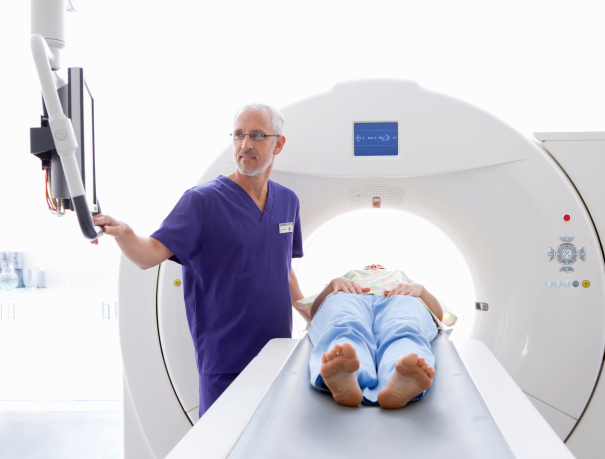
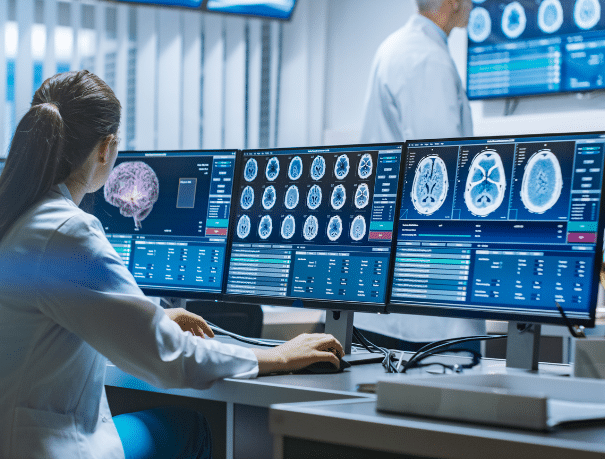
Once you have been placed on the CT table, it will begin to rotate around your body to obtain cross-sectional projections of bones, blood vessels and soft tissues, which are subsequently grouped using Artificial Intelligence. Instead of obtaining a single image, as occurs with conventional radiography, CT obtains multiple images with higher quality and sharpness, which increases diagnostic precision.
CASES IN WHICH IT IS RECOMMENDED
To whom?
Cranial CT is mainly indicated in the following cases:
- Evaluation of the state of the skull after suffering a strong blow or trauma to the head.
- Evaluation of the causes of symptoms such as severe headaches and difficulty hearing or speaking.
- Diagnosis and monitoring of tumor, degenerative and vascular pathologies.
Preparation for the exploration
Instructions
- Contrast administration: Most CT tests require the administration of contrast, either orally or through a vein. This allows the internal structures of the body to be visualized more clearly.
- Hydration: It is recommended that you come to the test well hydrated, having drunk at least one liter of water during the ten hours prior to the study. This makes it easier to remove contrast from the body.
- Metal objects: The technician will give you the necessary instructions, provide you with a gown, and ask you to remove any metal objects (jewelry, watches, piercings, hairpins, cell phones, dentures, and hearing aids).
- Cardiac devices: It is important that you inform the technician about any devices that you have implanted in your body (pacemakers, electrodes, and clips from previous surgeries). It is important that you inform the technician about any devices that you have implanted in your body (pacemakers, electrodes and clips from previous surgeries).

Medical professionals
The specialists who will assist you at CreuBlanca
A team of professionals to take care of you.

CreuBlanca centers
Find your nearest CreuBlanca center

Barcelona
Clinic CreuBlanca
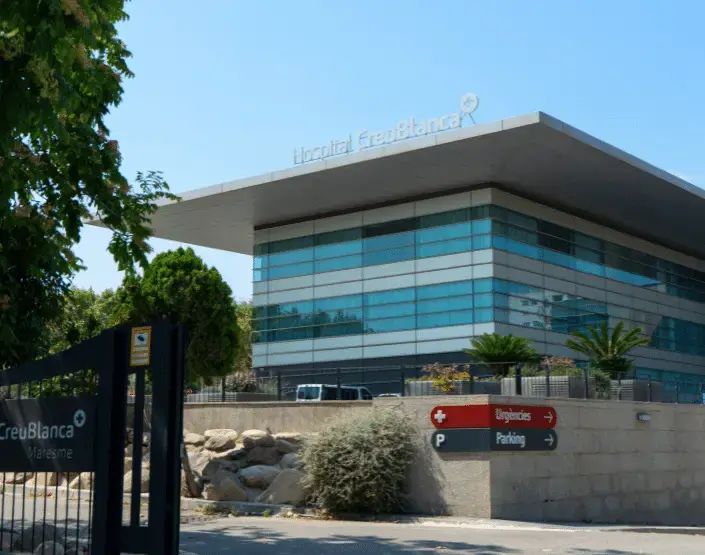
Mataró
CreuBlanca Maresme Hospital
Barcelona
Diagnosis Médica
Related articles
CreuBlanca's blog
You will find from the hand of our professionals advice to improve your health and information on the latest technologies applied in the health sector.
 Diagnostic Tests
02 Sep 2026
4 Min
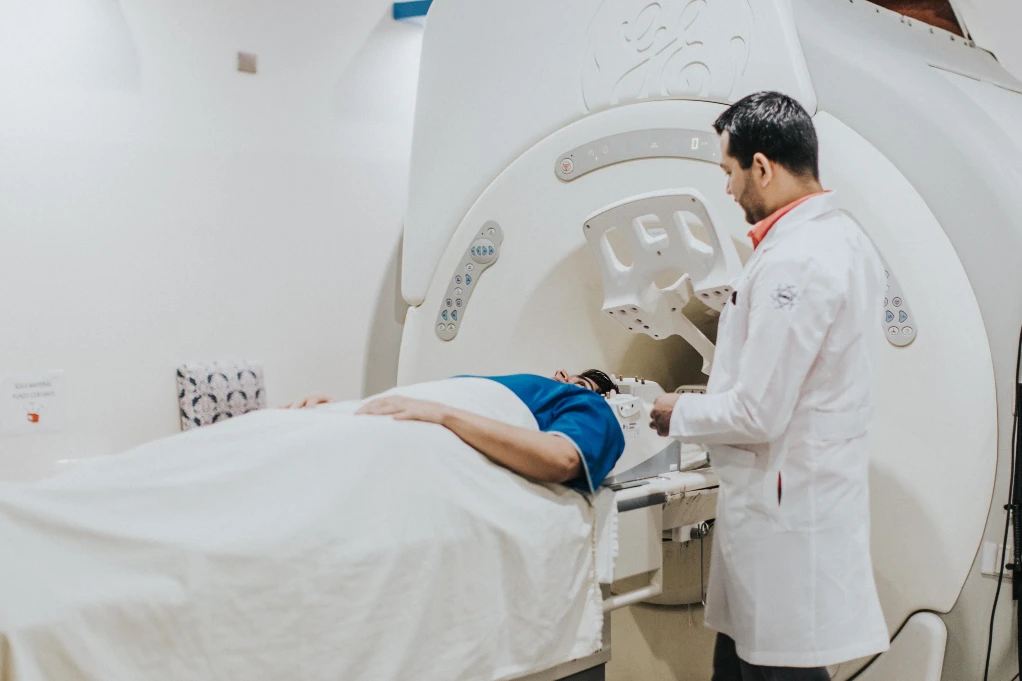
CT Scan (TAC): when is it indicated and what diseases it helps detect
A CT scan (Computed Tomography), also popularly known as a CAT scan or scanner (TAC in Spanish), is one of the most widely used and decisive diagnostic imaging tests in modern medicine. It allows for a precise three-dimensional X-ray of the inside of the body in just a few seconds.
 Specialties
28 Aug 2026
5 Min
PSA: when is it recommended to take this test
The PSA (Prostate-Specific Antigen) blood test is one of the most important tools in modern urology for the prevention and early detection of prostate pathologies. It consists of a simple blood draw that measures the concentration of this protein produced by the prostate gland.
 Diagnostic Tests
04 Aug 2026
4 Min
Do you have to wait months for an MRI? Here is how you can get the test done quickly at a private clinic
When a doctor requests a Magnetic Resonance Imaging (MRI) scan, the goal is usually to get a clear diagnosis to start treatment as soon as possible. However, appointment wait times can sometimes take longer than desired.